

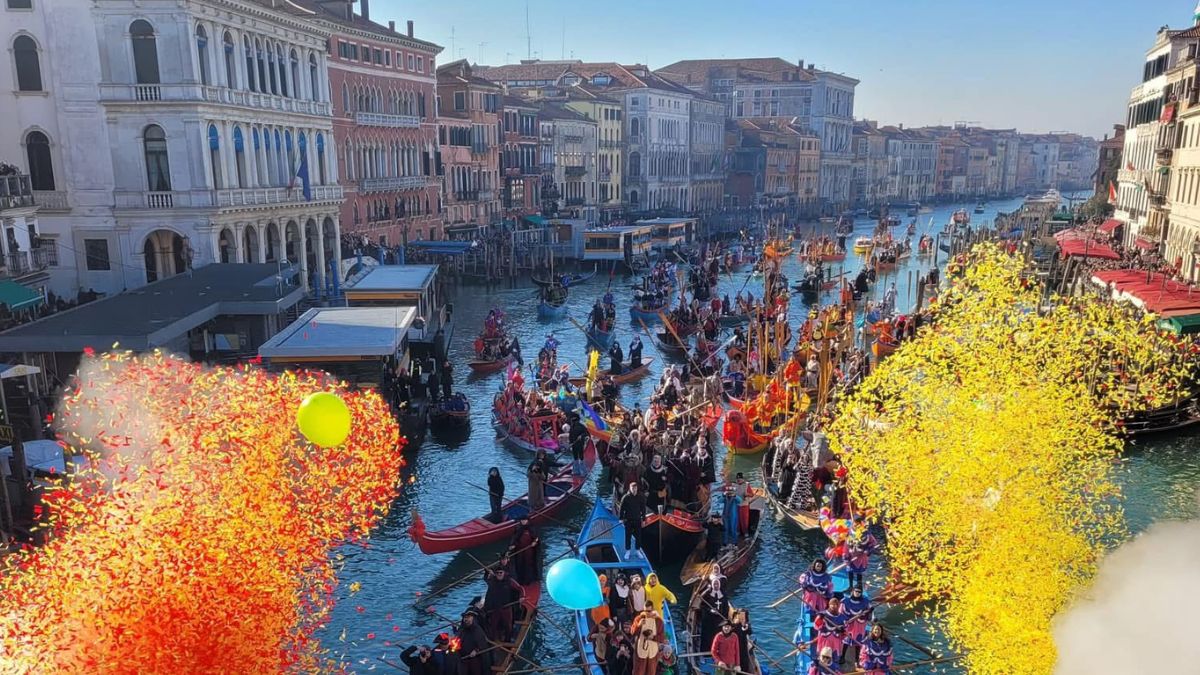
Every winter, Venice transforms. The narrow canals and palazzos that are quiet for much of the year suddenly pulsate with colour, music, and movement as one of the world’s oldest festivals returns. In 2026, the Venice Carnival runs from January 31 to February 17, and this year’s theme — “Olympus – The Origins of the Game” — is a clear nod to the approaching Milano-Cortina Winter Olympics, blending myth, competition, and centuries-old tradition into a celebration that feels both timeless and contemporary.
Venice Carnival began in the Middle Ages, when masks allowed people from all walks of life to mingle freely before Lent. Today, it remains much the same. Along the canals, artisans still craft handmade masks and velvet cloaks, and the city feels like a living theatre where every bridge and narrow calle becomes part of the stage.
More than a tourist attraction, the Carnevale di Venezia is a living tradition that connects past and present. To walk through Venice in February is to enter a world where history and fantasy blend seamlessly, where every mask, melody, and canal carries echoes of stories accumulated over centuries. Its true essence lies in contrast: quiet dawns beside empty waterways, crowded parades by midday, and lantern-lit squares that come alive again after sunset.
For travelers seeking a cultural journey, a romantic escape, or a once-in-a-lifetime experience in Europe, Venice Carnival 2026 remains one of the most compelling reasons to visit the city.
Venice Carnival 2026: The opening ceremony
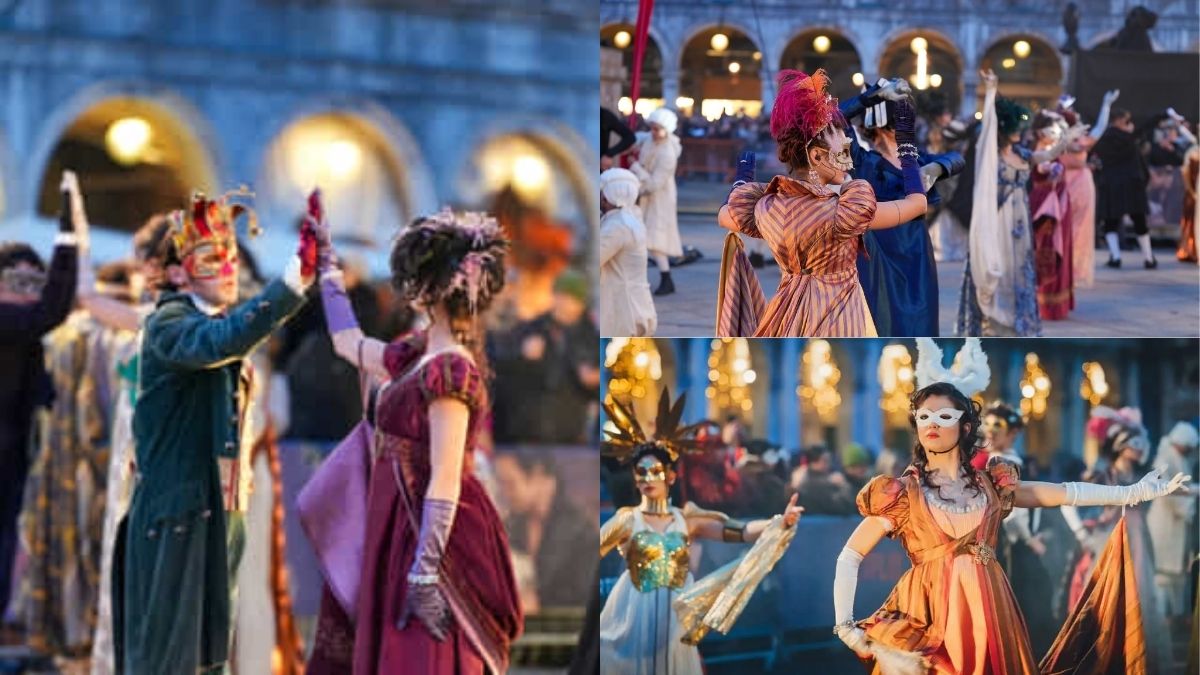
The 2026 edition opened on January 31 in Piazza San Marco with the Gran Ballo di Carnevale with Bridgerton. The event, realised in collaboration with Netflix and tied to the launch of the show’s fourth season, turned the square into an open-air ballroom.
Professional dancers in sumptuous period costumes performed elegant choreographies to the series’ soundtrack as dusk fell over the basilica and the lagoon. Vertical dance performances added a dramatic visual element, and thousands of spectators filled the piazza long after sunset.
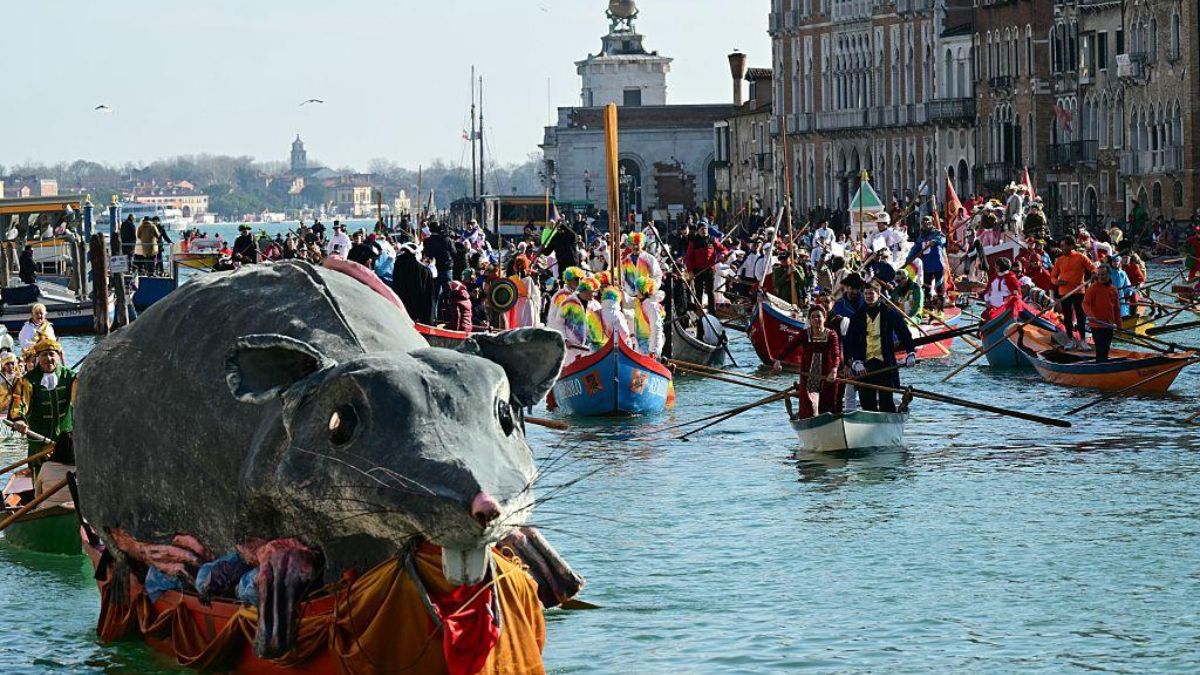
From that night onwards, the city slipped fully into carnival mode. In the mornings and afternoons, attention shifted to the water with the Festa Veneziana: a procession of traditional rowing boats led by the iconic pantegana, a giant papier-mâché rat that travels from Punta della Dogana to the Rialto Bridge, filling the Grand Canal with music, confetti, and colour.
The theme: “Olympus – The origins of the game”
The theme of Venice Carnival 2026 is closely linked to the upcoming 2026 Winter Olympics, hosted by Milan and Cortina d’Ampezzo. Titled “Olympus – The Origins of the Game”, this year’s carnival draws inspiration from ancient mythology and the pursuit of physical and mental excellence, connecting classical ideals with modern sport.
It also reflects Venice’s own history, when Carnival was a time of public challenges, acrobatic displays, and collective competitions. In 2026, this tradition is reinterpreted through performances, costumes, and installations that celebrate movement, discipline, and creativity, turning the festival into a bridge between Italy’s Olympic present and its cultural past.
Venice Carnival 2026: Event program
During Carnival, Venice does not revolve around a single main event. Instead, the entire city becomes a stage. Street artists, masked musicians, and actors perform daily in squares and narrow streets. Bridges turn into informal photo sets, cafés host small shows, and palaces open for exhibitions and private events. Evenings bring their own magic; narrow squares where daytime crowds gathered for parades become quiet corners where musicians play, friends share snacks, and the glow of lanterns reflects in the canal water.
Alongside this, a broad cultural program unfolds in theatres and museums, with concerts, plays, and art exhibitions linked to the annual theme. In 2026, more than 50 events are scheduled across Venice and Mestre, ensuring that every day offers something different. You can find the full day-by-day program on the official website: HERE
How to plan the perfect trip
To enjoy the Venice Carnival 2026 edition without stress, planning is essential. Check the official schedule regularly, as times may change due to weather or security measures. Arrive early for major events, especially in Piazza San Marco and along the Grand Canal. Saving maps and tickets offline is useful, as mobile networks can become overloaded.
At the same time, leave space for wandering – or outright getting lost: that’s where the magic comes to play. Some of the most memorable moments happen away from the main stages, in quiet courtyards or along less crowded canals.
When is the best time to go?
Most major performances are spread across the two-week period, but timing can shape your experience. Weekdays in early February are calmer and easier to manage, with slightly lower accommodation prices. Weekends and the final days before February 17 are busier but also deliver the strongest atmosphere and the most important events. Many visitors choose a midweek stay that includes one weekend, combining comfort with spectacle.
Where to stay during the Carnival
Accommodation during Venice Carnival sells out quickly, often months in advance. Booking early is essential. Staying in the historic center gives you the full experience, especially in areas like San Marco, Dorsoduro, or Cannaregio. You’ll be able to walk back to your hotel late at night after events, surrounded by masked revelers. If prices are too high, Mestre is a good alternative. It’s connected to Venice by frequent trains and buses, and travel time is short. Wherever you stay, reserve as early as possible for February 2026.
Getting around Venice during the Carnival
During carnival, Venice is extremely busy. Walking remains the best way to move around the maze of alleys and bridges, especially in the historic center. For longer distances, use the vaporetto (water buses), but expect queues at peak times. Multi-day passes are often more convenient and economical. Water taxis are fast but expensive and rarely worth it unless you’re traveling in a group.
Find out more about the official Venice City Passes HERE
Should you wear a costume?
Wearing at least a mask is highly recommended. It helps you blend into the atmosphere and makes the experience more immersive. Even a basic mask and cape can make you feel part of the festival. Wearing one is more than a souvenir — it’s a way to feel part of the story, to stand among performers and visitors alike and share in a spectacle that has captivated travellers for generations.
Venice has many shops offering handcrafted masks and costume rentals, from simple accessories to full historical outfits. Some studios also offer professional photo sessions in costume, which can be a memorable souvenir of your trip.
Direct flights to Venice: main airlines and routes
When planning your flight to Venice for Carnival, it helps to know that Venice Marco Polo Airport (VCE), the city’s main international gateway, is served by many major airlines from across Europe and beyond.
Budget carriers like Ryanair, Wizz Air, Volotea and easyJet operate hundreds of direct flights from cities such as London, Paris, Berlin, Barcelona, Madrid and more, making it easy to reach Venice from much of Europe without changing planes. In addition to these, larger network airlines including Eurowings, Norwegian and even global carriers like United Airlines offer seasonal or longer-haul service connecting Venice with wider international hubs, meaning visitors from farther afield can often find convenient routes into the city during Carnival season.